
Amphibious machines engineered to excavate, clear, and restore inside Central Florida’s freshwater wetlands without the ground damage of conventional equipment.
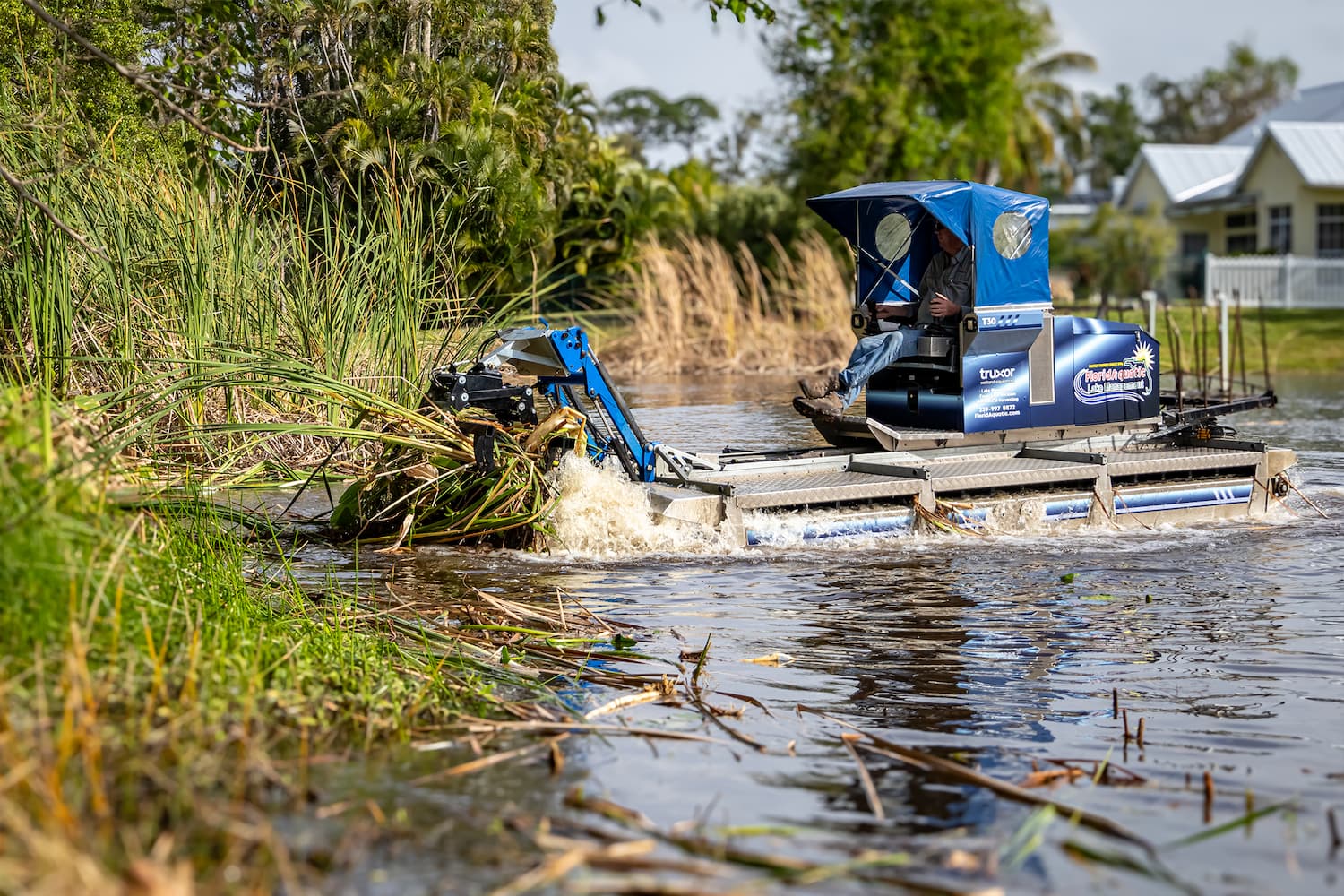
Orlando sits on one of the most wetland-dense landscapes in the state. The Shingle Creek headwaters, the Econlockhatchee floodplain, hundreds of interconnected lakes, and the constructed treatment wetlands that handle the region’s reclaimed water all share the same problem for contractors: ground that will not hold a machine.
Truxor amphibious equipment solves that problem by removing the need for solid ground entirely. It floats across open water, tracks over peat and saturated muck, and carries excavation, cutting, and sediment attachments to the work rather than waiting for the work to be brought to the bank.
That capability is why operators handling lake margin cleanouts in Winter Park, cattail control in Kissimmee basin retention areas, and habitat work near Lake Apopka turn to amphibious equipment when the site is too soft for anything else.
Orlando-area wetlands are freshwater, peat-heavy, and often permitted, which means equipment has to move material without tearing up the ground it sits on.
A treatment wetland cell east of Orlando, a hydrilla-choked lake margin in Windermere, and a cypress strand mitigation area in southwest Orange County all need different combinations of machine, attachment, and operator approach.
We evaluate your water depth, vegetation load, sediment type, and how far the site sits from a launch point, then recommend the Truxor configuration that will finish the job efficiently and within the limits of your permit.
If you manage wetlands for a Central Florida municipality, a water management district contractor, a theme park or master-planned community, or a lake management firm, our team can help you work inside the wetland without compromising it.
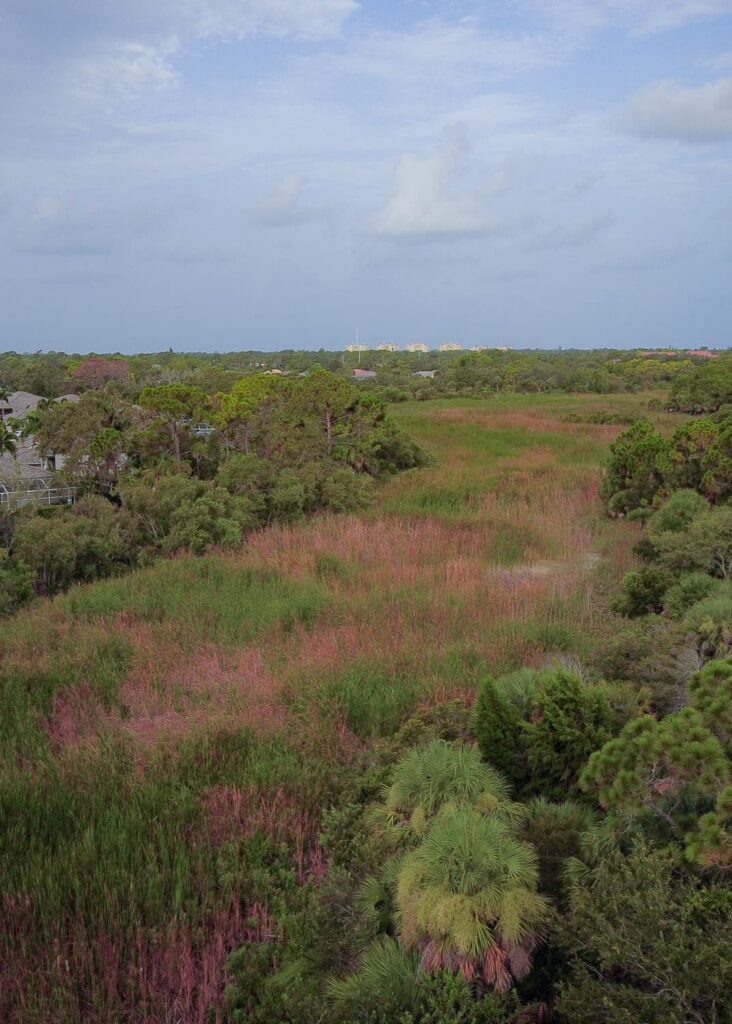
Central Florida’s freshwater wetlands are soft, deep, and closely regulated. Truxor machines let operators work in peat, muck, and shallow lakes where traditional excavators cannot stand.
Ground pressure low enough to cross saturated organic soils and lake-bottom muck without bogging down or scarring the substrate.
Work the inside of a treatment wetland or the far shoreline of a lake without barges, temporary roads, or long-reach equipment parked on the bank.
Move from vegetation removal to sediment excavation to restoration planting support by changing attachments, not equipment.
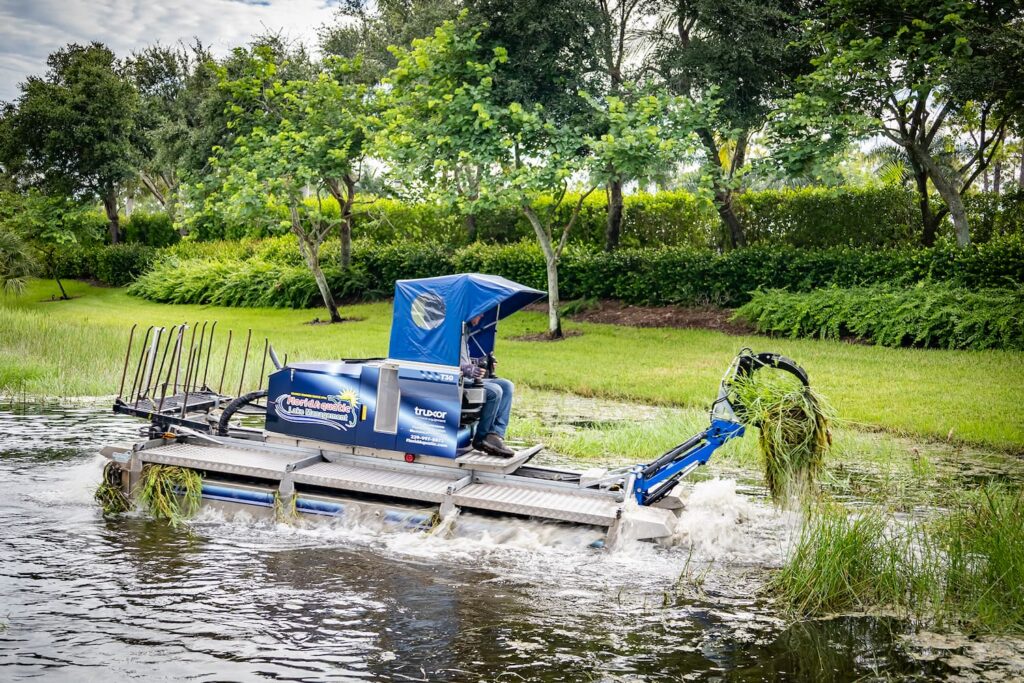
Orlando-area wetland projects often involve treatment wetlands, lake restoration, and mitigation work with detailed permit requirements. Truxor Harvester USA helps contractors, municipalities, and lake management companies across Orange, Seminole, Osceola, and Lake counties set up equipment that performs reliably in Central Florida’s freshwater conditions.
Every purchase includes:
See how a Truxor machine handles peat, lake muck, and dense emergent vegetation in real Orlando-area wetland conditions. From treatment cells to lake margins, find out what your crew could reach.
If your projects involve lakes, treatment wetlands, cypress strands, or saturated terrain anywhere in Central Florida, our team can help you determine the best equipment setup for your operation.
Orlando-area wetlands are freshwater and often built on deep peat or lake muck, so the standard choice is a low ground pressure amphibious machine like the Truxor that can float in open water and track across saturated organic soil without sinking.
Yes. Truxor machines are used to clear vegetation, excavate accumulated sediment, and restore flow inside constructed treatment wetlands and along lake shorelines where the bottom is too soft for conventional equipment.
A long-reach excavator only covers what it can reach from solid ground. An amphibious Truxor drives into the wetland and works any part of it, which eliminates barges, mats, and the compaction that comes with staging heavy iron on a soft bank.
It is. The light footprint and attachment flexibility make it well suited to permitted restoration and mitigation sites where disturbance limits are written into the permit and the surrounding habitat has to survive the work.
Buyers include lake management companies, environmental and site contractors, municipal and county stormwater crews, utilities operating treatment wetlands, and consultants managing mitigation and restoration projects across Central Florida.