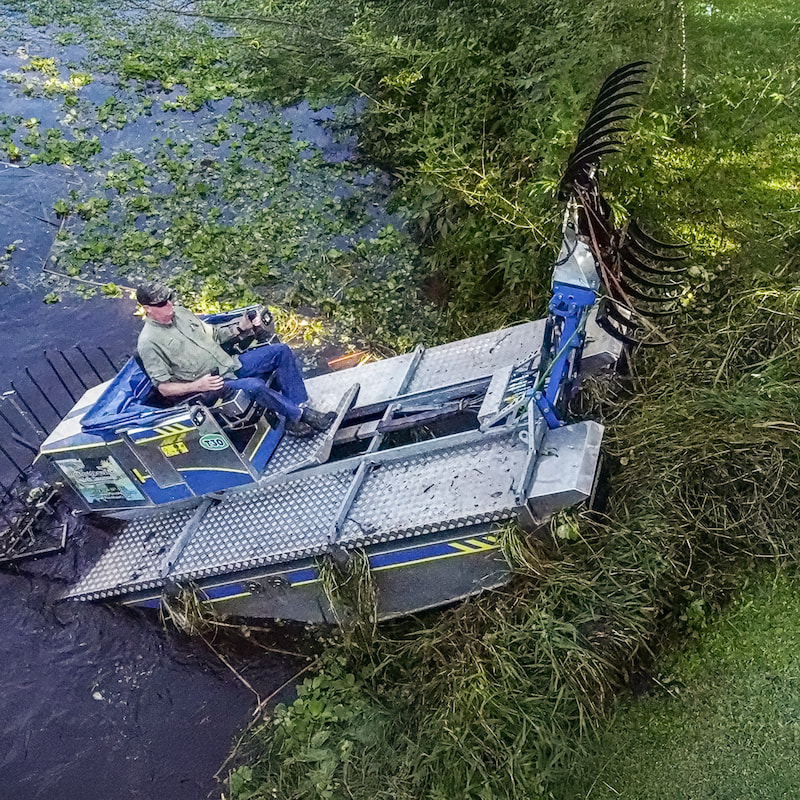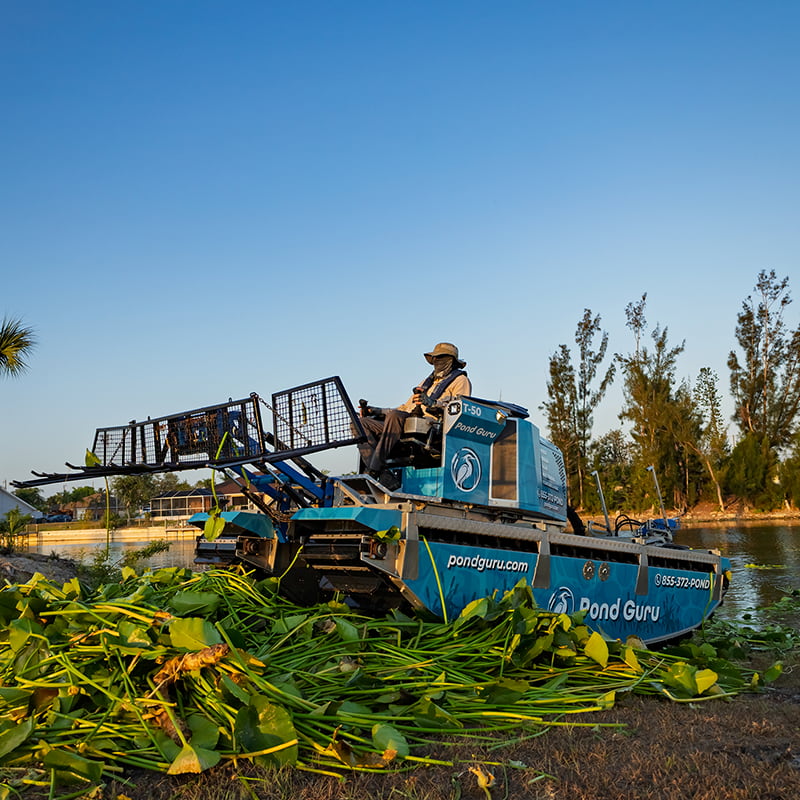
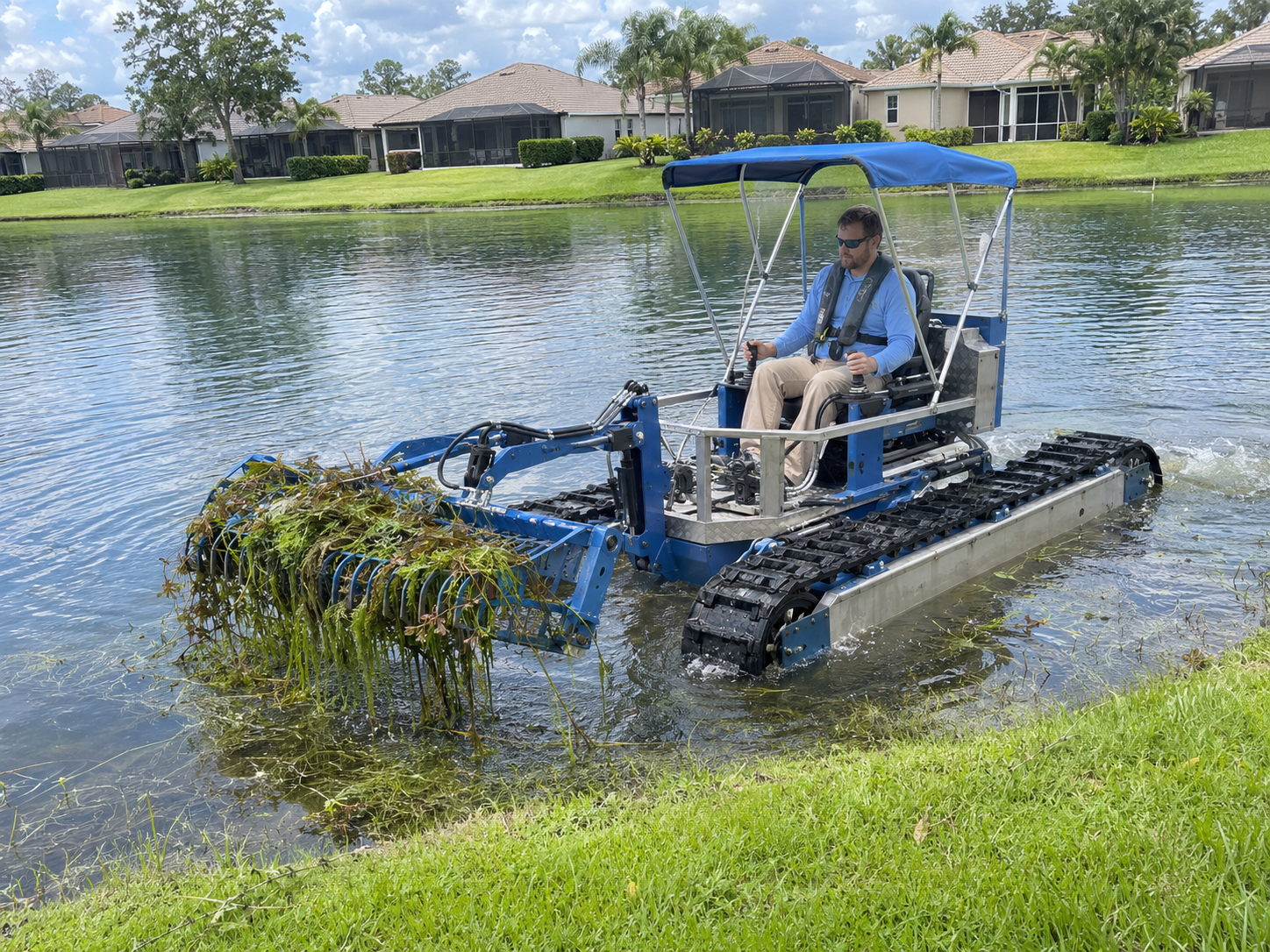
An amphibious excavator goes where a conventional excavator cannot: out onto the water, across the marsh, and over saturated ground that would swallow a standard machine. It does this by riding on sealed, buoyant pontoons instead of ordinary tracks, which let it float, move, and dig in environments that are neither solid land nor open water. For anyone who works in wetlands, shallow water, or soft shorelines, this capability is the difference between getting the job done and not being able to reach it at all. Understanding what these machines are, how they work, and who actually needs one is the starting point for any equipment decision in wet terrain.
This guide explains what an amphibious excavator is, how it works, what it is used for, and who needs one.
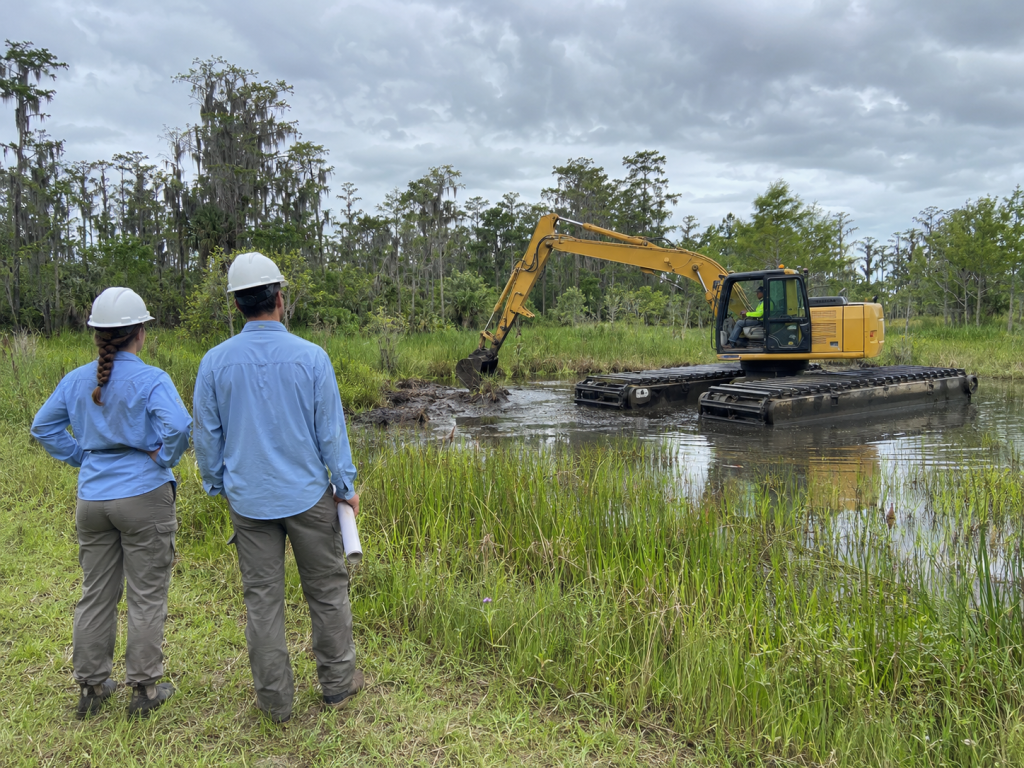
An amphibious excavator is an excavator that operates on water and soft, saturated ground by riding on sealed, buoyant pontoon undercarriages instead of standard tracks. This lets it float and move through marshes, shallow water, and wetlands where a conventional excavator would sink. It is used for dredging, wetland excavation, canal clearing, and shoreline work.
Key Takeaways
- Amphibious excavators work where standard machines cannot, on water and soft, saturated ground.
- Buoyant pontoon undercarriages let them float and move instead of sinking.
- They are used for dredging, wetland excavation, canal clearing, and shoreline restoration.
- Compact amphibious machines extend this capability to tight, shallow, and sensitive sites.
- Contractors, municipalities, and land managers are the typical buyers who need this access.
What Is an Amphibious Excavator?
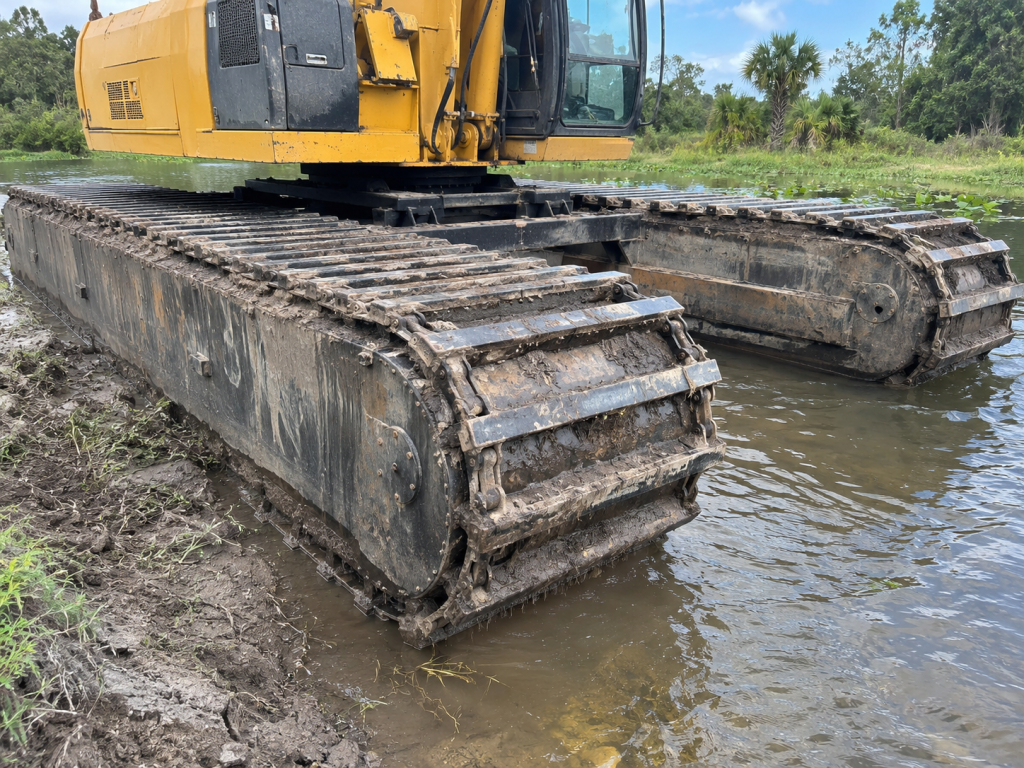
An amphibious excavator is a type of excavator built to operate in water and on soft, waterlogged terrain. Instead of the standard tracks of a conventional excavator, it rides on sealed pontoon undercarriages that are buoyant, allowing the machine to float and to move across surfaces that cannot support normal equipment. This gives it access to environments that would otherwise be unreachable or unsafe.
The defining feature is the undercarriage that keeps the machine from sinking.
What makes an excavator amphibious:
- Buoyant pontoons. The machine sits on sealed, hollow pontoon floats that provide buoyancy, so it can float on water and spread its weight over soft ground.
- Track-equipped pontoons. Those pontoons are fitted with tracks or cleats that propel the machine, letting it move through water and across marsh and mud.
- Low ground pressure. By spreading the weight over large pontoons, the machine exerts far less pressure on the ground than a conventional excavator, so it does not sink into soft terrain.
- Added stability options. Some amphibious excavators use additional pontoons or spuds for extra stability when digging in deeper or softer conditions.
The result is a machine that bridges land and water. A conventional excavator is limited to solid ground, and putting one to work near water often means building access, using mats, or working from a barge. An amphibious excavator instead moves directly into and across the wet environment under its own power. This same principle, operating directly in water and soft terrain, is what drives the design of compact amphibious machines and floating excavators used in lake and pond work.
How Does an Amphibious Excavator Work?
An amphibious excavator works by using its buoyant pontoon undercarriage to float on water and distribute its weight over soft ground, while tracks on the pontoons propel it forward. The excavator arm and attachment then dig, dredge, or move material just as a standard excavator would, but from a platform that can operate on water and in wetlands rather than only on solid land.
The machine combines the floating-and-moving ability of its undercarriage with the digging ability of a standard excavator.
How it operates:
- Floating and moving. The sealed pontoons keep the machine afloat in water and supported on soft ground, while the tracks on those pontoons drive it to and through the work area.
- Positioning. The machine moves itself into position across terrain a wheeled or standard tracked machine could not cross, including shallow water and saturated marsh.
- Digging and dredging. Once positioned, the excavator arm operates like any excavator, using a bucket or attachment to excavate, dredge sediment, clear vegetation, or move material.
- Working without a barge. Because the machine floats and moves on its own, it often eliminates the need for a barge, crane, or extensive access construction to work on or near the water.
This combination is what makes the machines so useful in difficult terrain. The work the excavator arm does is familiar, but the ability to deliver that work in water and wetlands, under the machine’s own power and without a barge, is the real advantage. Compact amphibious machines take this further by being light and transportable enough to launch themselves from a trailer and drive straight into the water, making them practical for sites where even a large pontoon excavator would be hard to deploy. That is the approach behind wetland excavation equipment designed for sensitive and hard-to-reach environments.
What Is an Amphibious Excavator Used For?
An amphibious excavator is used for work in water and wet terrain, including dredging sediment from lakes and ponds, excavating in wetlands and marshes, clearing canals and waterways, restoring shorelines, and responding to flooding and environmental projects. Its purpose is to perform excavation and material-moving work in places a conventional excavator cannot safely reach.
The applications all share one thing: they happen in or next to water, on ground that cannot support ordinary equipment.
Common uses include:
- Dredging. Removing accumulated sediment and muck from lakes, ponds, canals, and retention basins to restore depth and capacity, working directly from the water. This is core to lake dredging equipment applications.
- Wetland and marsh excavation. Digging and shaping in wetlands, marshes, and saturated soils where access and ground pressure defeat standard machines.
- Canal and waterway clearing. Clearing overgrowth, debris, and sediment from canals and channels to keep water flowing, often where banks are soft or inaccessible.
- Shoreline restoration. Rebuilding and stabilizing eroding shorelines and banks, working from the water side where land access is limited.
- Flood and environmental work. Operating in flooded areas and on environmental projects that require reaching and working in wet, unstable terrain.
Across these applications, the recurring theme is access. The excavation work itself is conventional; what the amphibious design adds is the ability to do it in environments that would otherwise require costly workarounds or be impossible to reach. For projects in sensitive environments, these machines also offer the advantage of working with low ground pressure and minimal disturbance, which matters where protecting the surroundings is part of the job, as in shoreline restoration.
Who Needs an Amphibious Excavator?
The buyers who need an amphibious excavator are those who regularly work in water or on soft, wet terrain: dredging and marine contractors, municipalities and stormwater departments, lake and pond management companies, environmental and wetland restoration firms, and land managers for golf courses, HOAs, and large properties. Anyone whose work requires reaching water or saturated ground benefits from the access these machines provide.
The need comes down to how often the work involves terrain that stops conventional equipment.
Who typically needs one:
- Dredging and marine contractors. Firms that dredge, clear, and excavate in and around water need machines that can reach and operate in those environments efficiently.
- Municipalities and stormwater agencies. Public agencies maintaining canals, stormwater systems, retention ponds, and flood-control infrastructure require access to wet sites across their jurisdictions.
- Lake and pond management companies. Businesses that maintain and restore waterbodies for clients need to dredge, clear vegetation, and work shorelines, often across many different sites.
- Environmental and restoration firms. Companies doing wetland, marsh, and habitat restoration need low-impact machines that can work in sensitive, saturated environments.
- Land and property managers. Those responsible for golf courses, HOA communities, and large properties with water features need the ability to maintain and restore that water.
For these buyers, the decision often is not whether to work in wet terrain but how to do it most efficiently and with the least disturbance. A key consideration is versatility: a compact amphibious machine that can switch attachments to dredge, excavate, cut vegetation, and rake handles a far wider range of jobs than a single-purpose excavator, which is especially valuable for contractors and managers facing varied work. Weighing that range of capability against the specific jobs ahead is the heart of the buying decision, and it is worth working through with a knowledgeable equipment dealer.
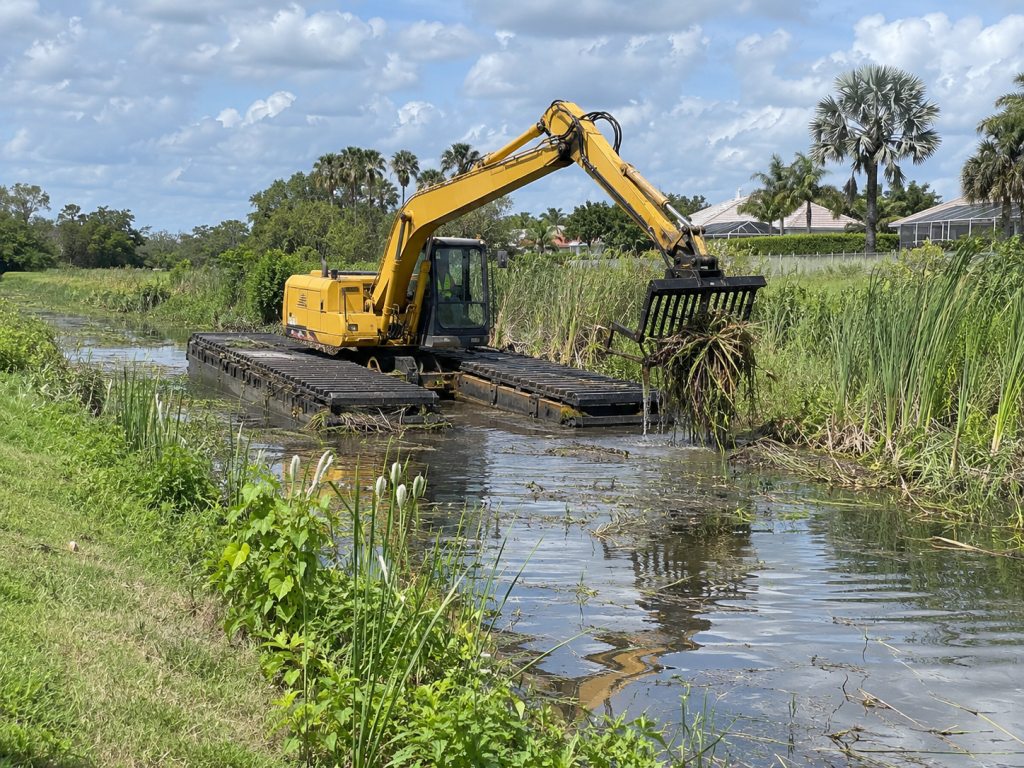
Explore Amphibious Equipment With Truxor Harvester USA
An amphibious excavator exists to solve a single stubborn problem: how to excavate, dredge, and clear in water and on soft, saturated ground where conventional equipment sinks or cannot reach. By riding on buoyant pontoons, it floats and moves through marshes, shallow water, and wetlands, delivering familiar excavation work in places that would otherwise require a barge or be unreachable entirely. For contractors, municipalities, and land managers who regularly face wet terrain, that access is the whole point.
Truxor Harvester USA is the official United States dealer for the Swedish-made Truxor, a compact amphibious machine that dredges, excavates, harvests vegetation, and rakes with quick-change attachments, driving itself between land and water without a barge or ramp.
Because the right machine depends on the work you do and where you do it, the best next step is a conversation about your projects. To explore amphibious equipment for your needs, contact Truxor Harvester USA.
Frequently Asked Questions
What is the difference between an amphibious excavator and a regular excavator?
The difference is the undercarriage and where the machine can work. A regular excavator runs on standard tracks and is limited to solid ground, while an amphibious excavator rides on sealed, buoyant pontoons that let it float on water and move across soft, saturated terrain without sinking. The excavator arm works the same way on both, but the amphibious version can operate in water and wetlands a regular machine cannot reach.
Can an amphibious excavator float?
Yes. An amphibious excavator is designed to float, which is the core of what makes it amphibious. Its sealed, hollow pontoon undercarriage provides buoyancy that keeps the machine afloat on water, while tracks on those pontoons let it propel itself. This floating ability, combined with low ground pressure, allows the machine to work on open water and across soft, waterlogged ground that would not support a conventional excavator.
What is an amphibious excavator used for?
It is used for excavation and material-moving work in water and wet terrain, including dredging sediment from lakes, ponds, and canals, excavating in wetlands and marshes, clearing overgrown waterways, restoring shorelines, and working on flood and environmental projects. The common thread is that the work takes place in or beside water, on ground too soft or inaccessible for a conventional excavator to operate safely.
Do you need a barge for an amphibious excavator?
Generally no, and avoiding the need for a barge is a major advantage. Because an amphibious excavator floats and propels itself on its pontoons, it can move into and across the water under its own power rather than being carried on a barge. Compact amphibious machines can even launch themselves from a trailer directly into the water, eliminating the cost and complexity of barges, cranes, or built access in many projects.
Who buys amphibious excavators?
Typical buyers are those who regularly work in or near water and wet terrain: dredging and marine contractors, municipalities and stormwater departments, lake and pond management companies, environmental and wetland restoration firms, and managers of golf courses, HOA communities, and large properties with water features. For these buyers, the machine’s ability to access wet sites, often with versatility across several kinds of work, is what justifies the investment.