If you manage a pond, lake, or stormwater system, you have likely faced the decision between chemical vs mechanical pond weed removal. Both methods are widely used, both can be effective, and both come with trade-offs that impact cost, appearance, water quality, and long-term maintenance.
For HOA board members, property managers, golf course superintendents, and private pond owners, the goal is not just to remove weeds. The goal is to choose a strategy that fits how the pond is used, how often it needs to be maintained, and what level of control is required over time.
This guide breaks down the real differences between chemical and mechanical approaches so you can make an informed decision based on your pond’s conditions and your property’s priorities.
Understanding Mechanical Pond Weed Removal
At a high level, the difference between chemical vs mechanical pond weed removal comes down to how the vegetation is controlled.
- Chemical removal uses aquatic herbicides to kill or suppress plant growth
- Mechanical removal physically cuts and removes vegetation from the water
Both methods can reduce weed coverage, but they operate very differently beneath the surface. One targets plant biology. The other removes plant mass directly.
Choosing between them requires understanding not just how they work, but what happens after the weeds are gone.
Chemical Pond Weed Removal: How It Works
Chemical pond weed removal relies on aquatic herbicides that are specifically labeled for use in water.
These products are designed to:
- Target specific plant species
- Disrupt plant growth processes
- Kill or weaken vegetation over time
Depending on the product, herbicides may act:
- Systemically (absorbed and distributed throughout the plant)
- On contact (damaging exposed plant tissue)
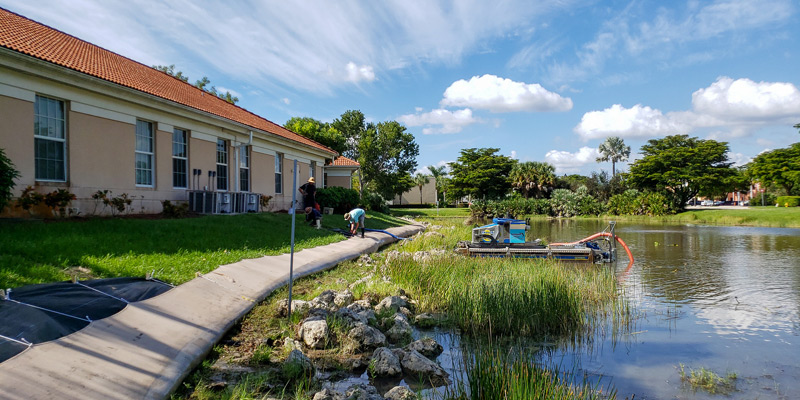
Chemical treatment is often used when vegetation is widespread or when access for equipment is limited.
When Chemical Weed Removal Is Typically Used
Chemical approaches are commonly used in situations where:
- Weed growth is dense across large areas
- The pond cannot be accessed easily by machinery
- Selective control of specific plant species is required
- Immediate physical removal is not necessary
For many managed properties, herbicides are part of routine maintenance programs.

Mechanical Pond Weed Removal: How It Works
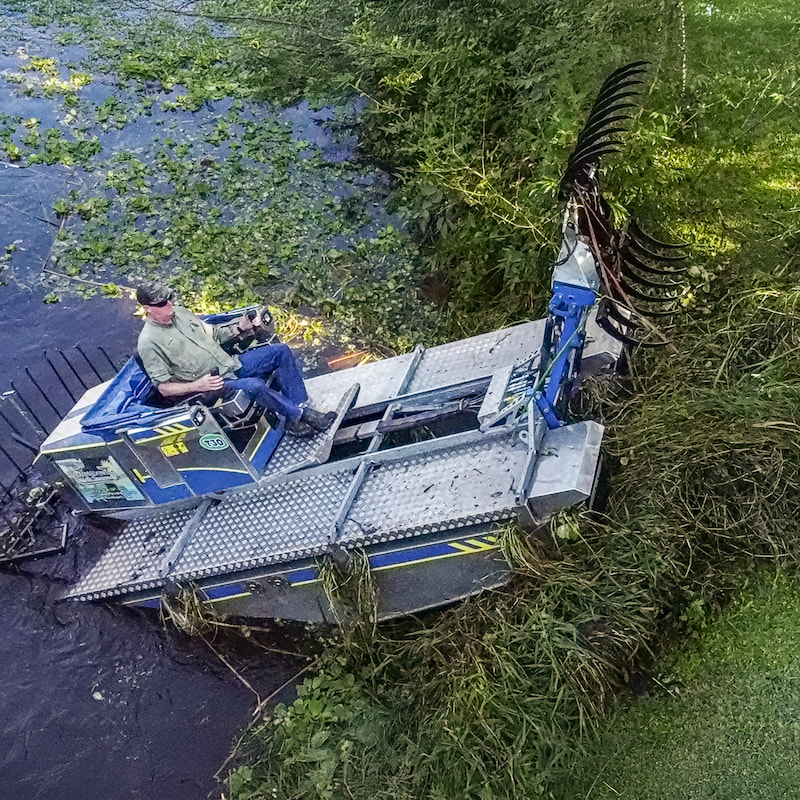
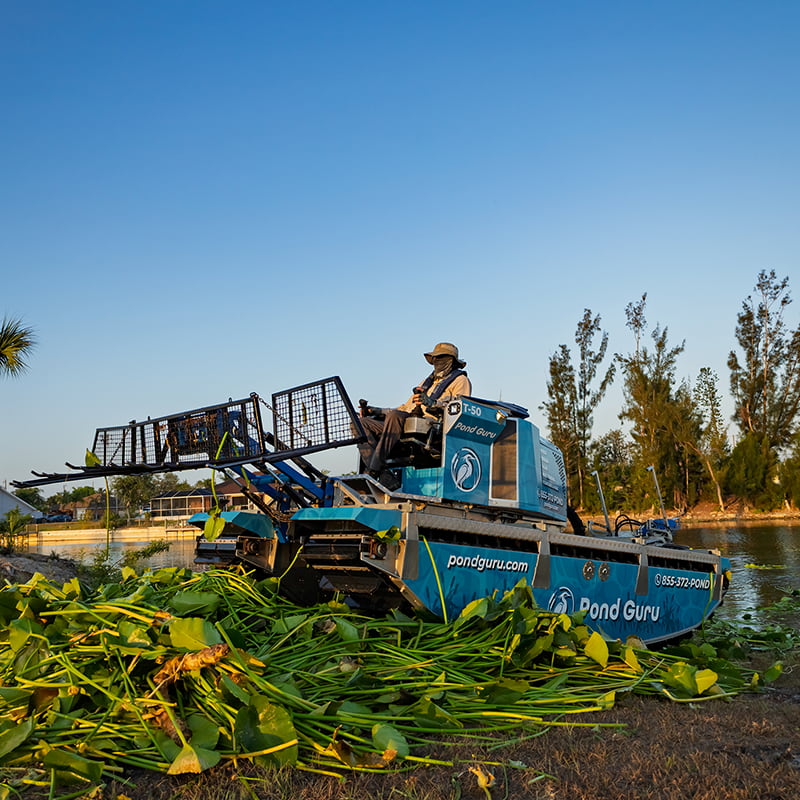
Mechanical pond weed removal involves physically cutting, collecting, and removing vegetation from the water.
This is typically done using specialized equipment such as:
- Aquatic weed harvesters
- Amphibious machines
- Cutting and conveyance systems
Instead of killing the plant and leaving it in place, mechanical removal extracts the biomass from the pond entirely.
When Mechanical Weed Removal Is Used
Mechanical removal is most effective when:
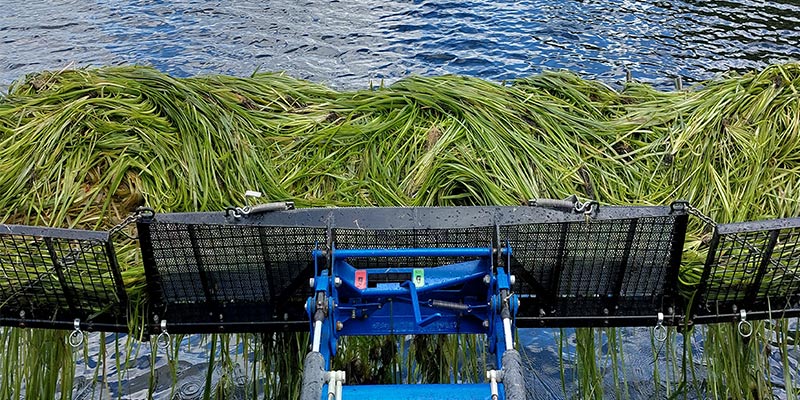
- Vegetation is forming thick surface mats
- Immediate visual improvement is required
- Organic buildup is contributing to water quality issues
- Shoreline areas are overgrown
- Chemical use is restricted or undesirable
It is especially useful in high-visibility areas such as HOAs and golf courses where appearance matters.
Key Difference #1: What Happens to the Plant Material
One of the most important distinctions in chemical vs mechanical pond weed removal is what happens after treatment.
Chemical treatment
- Kills the plant
- Leaves it in the water
- Plant material decomposes over time
Mechanical removal
- Cuts and removes the plant
- Physically extracts biomass from the pond
- Reduces organic accumulation immediately
This difference has a major impact on nutrient levels and long-term pond health.
Key Difference #2: Impact on Water Quality
Water quality responds differently depending on the method used.
Chemical removal impact
When large amounts of vegetation die:
- Oxygen levels may temporarily drop
- Decomposition releases nutrients back into the water
- Algae growth may increase afterward
This does not mean chemical treatment is unsafe. It means timing and application must be carefully managed.
Key Difference #3: Speed of Results
Speed is another major factor.
Chemical treatment timeline
- Visible results may take days to weeks
- Full die-off can take time depending on the product
Mechanical removal timeline
- Immediate visual improvement
- Large areas can be cleared quickly
For properties where appearance is a priority, mechanical removal often provides faster results.
Key Difference #4: Long-Term Maintenance Strategy
Neither method is a permanent solution on its own.
Chemical approach
- Often requires repeat applications
- Works best as part of a scheduled program
- Controls growth but does not remove underlying nutrients
Mechanical approach
- Reduces plant mass and nutrient load
- May require periodic harvesting
- Works well when combined with other management practices
The most effective ponds typically use a combination of strategies rather than relying on one method alone.
Which Method Is Better for Your Pond?
There is no universal answer to chemical vs mechanical pond weed removal. The right approach depends on the pond’s condition and how it is used.
Chemical removal may be better when:
- Targeting specific invasive species
- Managing large areas efficiently
- Budget constraints limit mechanical options
Mechanical removal may be better when:
- Immediate results are needed
- Organic buildup is a concern
- Aesthetic quality is a priority
- Chemical use is restricted
In many cases, the best solution is a hybrid approach.
Frequently Asked Questions
Is chemical pond weed removal safe for fish?
Yes, when aquatic-labeled herbicides are used correctly and applied at proper rates, they can be safe for fish. Timing and oxygen levels should always be considered.
Does mechanical pond weed removal damage the pond?
No. When performed properly, mechanical removal is a controlled process that improves pond conditions by removing excess vegetation.
Which method is more cost-effective long term?
It depends on the pond. Chemical treatments are often cheaper upfront, while mechanical removal may reduce long-term maintenance needs.
Can you combine chemical and mechanical weed removal?
Yes. Many pond management plans use both methods to balance immediate results with long-term control.
What is the fastest way to clear pond weeds?
Mechanical removal provides the fastest visible results because vegetation is physically removed immediately.